 Image 1 of 1
That is the real problem with Dracula.
The plot itself is surprisingly straightforward: a vampire comes to England, a group of people figures out what he is, and they hunt him down.
Bram Stoker just refuses to tell you that story normally.
Instead, Dracula hands you journals, letters, telegrams, newspaper clippings, a ship’s log, and even a phonograph diary and expects you to assemble the case.
So if you have ever been halfway through a chapter thinking:
Wait. Whose diary am I reading now?
Excellent. You have found the problem.
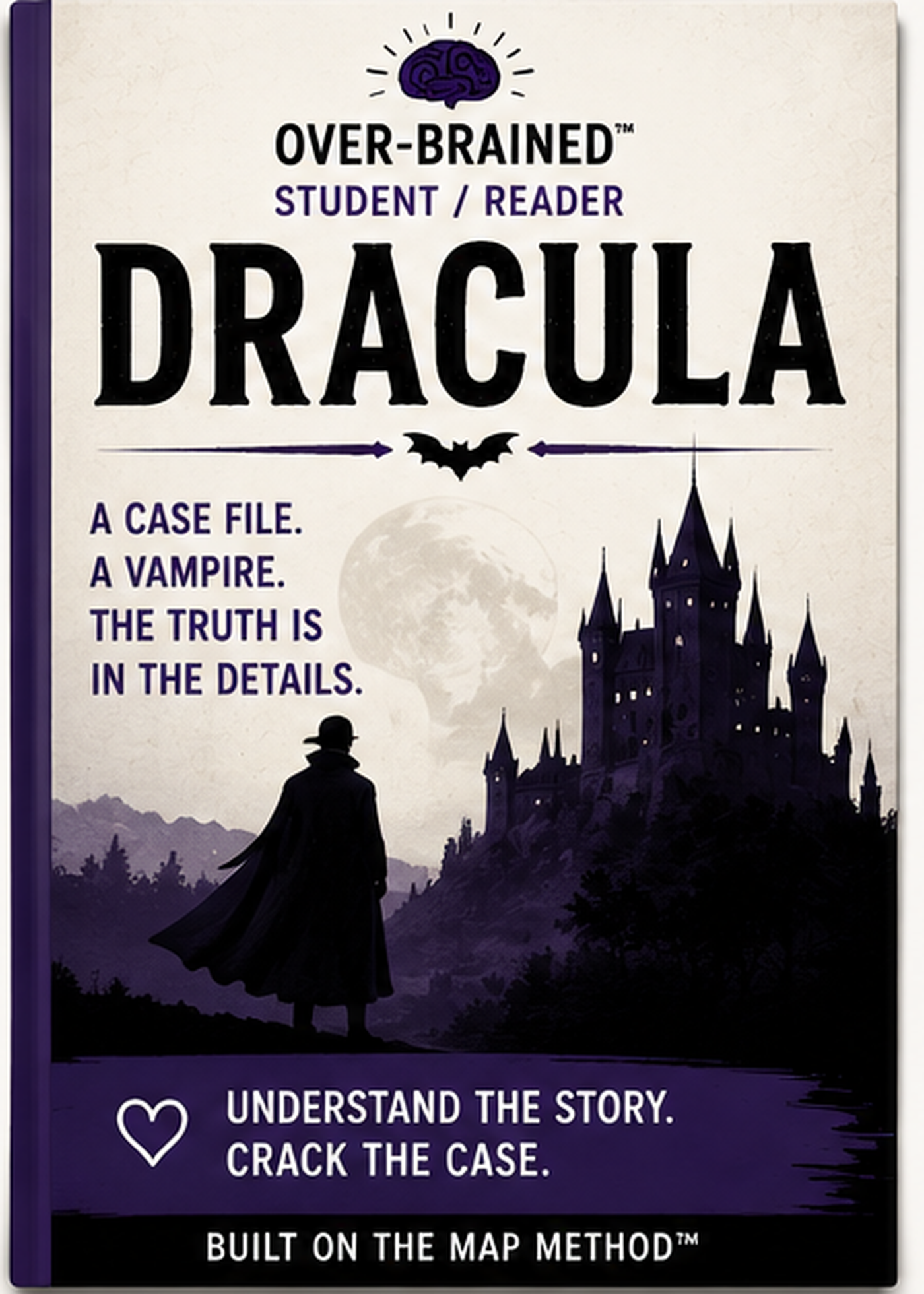
The Over-Brained™ Dracula Student / Reader is a 43-page guide built for neurodivergent readers who need the case file assembled before they are expected to analyze what it means.
You start with Dracula in Seven Beats, the entire story up front, ending included. Then the guide takes you through all 27 chapters in three manageable movements so you can use your working memory for the interesting stuff instead of constantly rebuilding the plot.
Dracula in Seven Beats, the whole story before you begin
The 60-Second Setup
A complete 27-chapter No-BS Plot Map
Three Unit Openers with brain-load forecasts and clear stop points
Document-writer tracking so you know whose journal, letter, or recording you are reading
Character Decoder
Five-theme Theme Decoder
Symbol Decoder for blood, sacred objects, technology, mirrors, and animals
Decoder Cards for:
The Vampire Rules
The Staking of Lucy
Protecting Mina
What Your Teacher Probably Wants You to Notice
Six Essay Angles That Don’t Suck
Thesis starters
Annotation Cheatsheet
ADHD Brain Notes
Autistic Reader Notes
ND Reader Notes
Seven-session executive-function reading plan
A minimum-viable catch-up route when you are already behind
Recovery Dashboards
The “I’m Lost” Recovery Page
Final exam and essay preparation
And here is the part we especially like about this book:
The reader who notices the tiny detail that does not fit, cross-checks conflicting information, remembers what somebody said eighty pages ago, or catches what everyone else skimmed past?
That reader has an advantage here.
Mina ultimately helps defeat Dracula by gathering the scattered documents and cross-referencing them into one usable record. The case-file structure makes careful pattern tracking central to the novel itself.
The thing someone once called “overthinking” might be exactly the skill this book rewards.
You don't need a shorter book.
You need the assembled file.
Access is not equal without equity.
Built on The MAP Method
That is the real problem with Dracula.
The plot itself is surprisingly straightforward: a vampire comes to England, a group of people figures out what he is, and they hunt him down.
Bram Stoker just refuses to tell you that story normally.
Instead, Dracula hands you journals, letters, telegrams, newspaper clippings, a ship’s log, and even a phonograph diary and expects you to assemble the case.
So if you have ever been halfway through a chapter thinking:
Wait. Whose diary am I reading now?
Excellent. You have found the problem.
The Over-Brained™ Dracula Student / Reader is a 43-page guide built for neurodivergent readers who need the case file assembled before they are expected to analyze what it means.
You start with Dracula in Seven Beats, the entire story up front, ending included. Then the guide takes you through all 27 chapters in three manageable movements so you can use your working memory for the interesting stuff instead of constantly rebuilding the plot.
Dracula in Seven Beats, the whole story before you begin
The 60-Second Setup
A complete 27-chapter No-BS Plot Map
Three Unit Openers with brain-load forecasts and clear stop points
Document-writer tracking so you know whose journal, letter, or recording you are reading
Character Decoder
Five-theme Theme Decoder
Symbol Decoder for blood, sacred objects, technology, mirrors, and animals
Decoder Cards for:
The Vampire Rules
The Staking of Lucy
Protecting Mina
What Your Teacher Probably Wants You to Notice
Six Essay Angles That Don’t Suck
Thesis starters
Annotation Cheatsheet
ADHD Brain Notes
Autistic Reader Notes
ND Reader Notes
Seven-session executive-function reading plan
A minimum-viable catch-up route when you are already behind
Recovery Dashboards
The “I’m Lost” Recovery Page
Final exam and essay preparation
And here is the part we especially like about this book:
The reader who notices the tiny detail that does not fit, cross-checks conflicting information, remembers what somebody said eighty pages ago, or catches what everyone else skimmed past?
That reader has an advantage here.
Mina ultimately helps defeat Dracula by gathering the scattered documents and cross-referencing them into one usable record. The case-file structure makes careful pattern tracking central to the novel itself.
The thing someone once called “overthinking” might be exactly the skill this book rewards.
You don't need a shorter book.
You need the assembled file.
Access is not equal without equity.
Built on The MAP Method