 Image 1 of 1
Jane Austen is not difficult because nothing happens.
She is difficult because everything happens underneath what people say.
A compliment may be an insult. A polite visit may be a power move. Money determines who can marry whom, but almost nobody talks about money directly. Characters make judgments based on scraps of information, and the narrator is quietly laughing at half of them.
For neurodivergent readers, that can mean trying to decode the plot, the social rules, the irony, the historical context, and the teacher’s expectations all at once.
This guide gives you the map first.
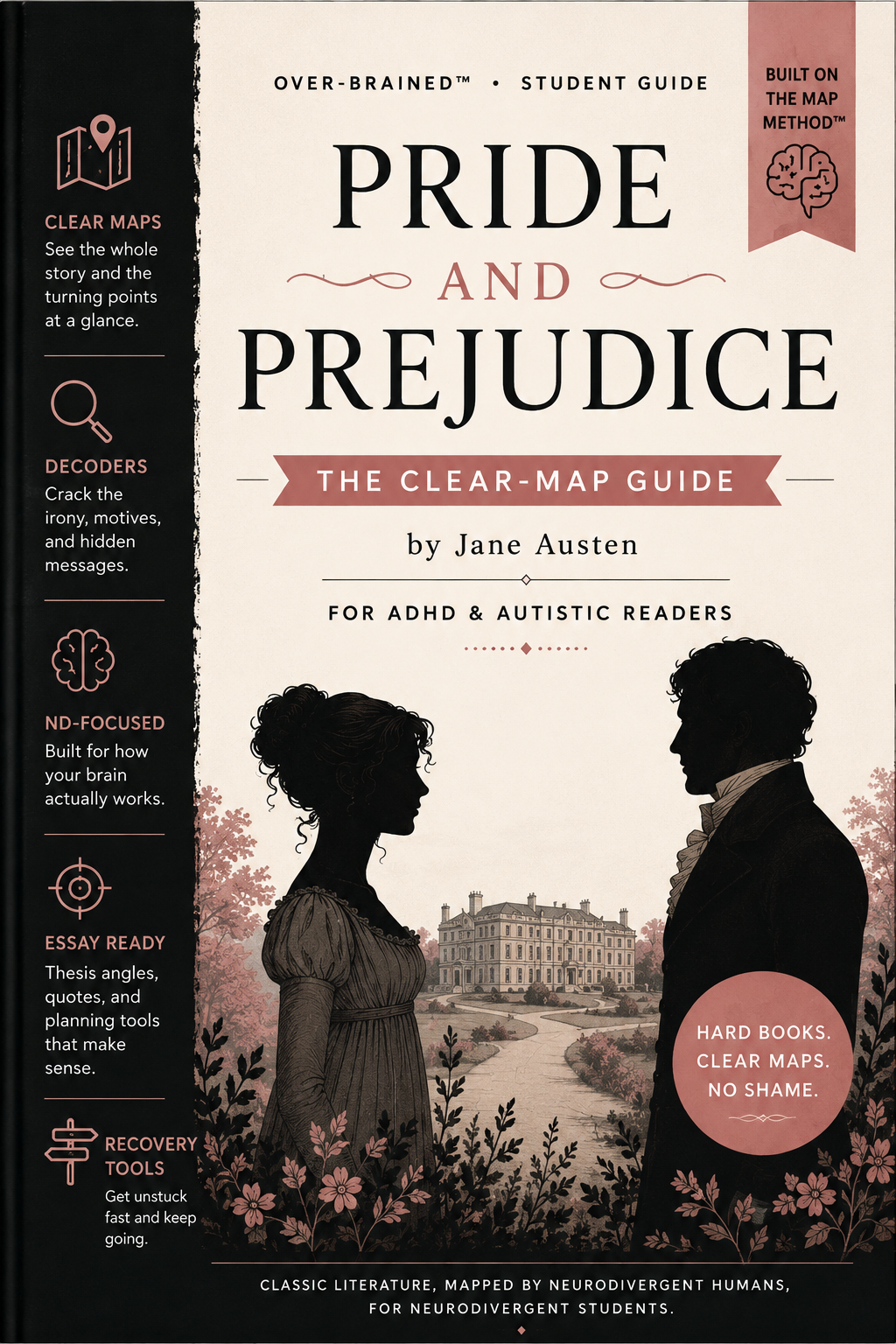
The Over-Brained™ Pride and Prejudice Student Reader is built for students with ADHD, autism, dyslexia, executive-function challenges, 2e profiles, or any brain that does better when the hidden structure is made visible.
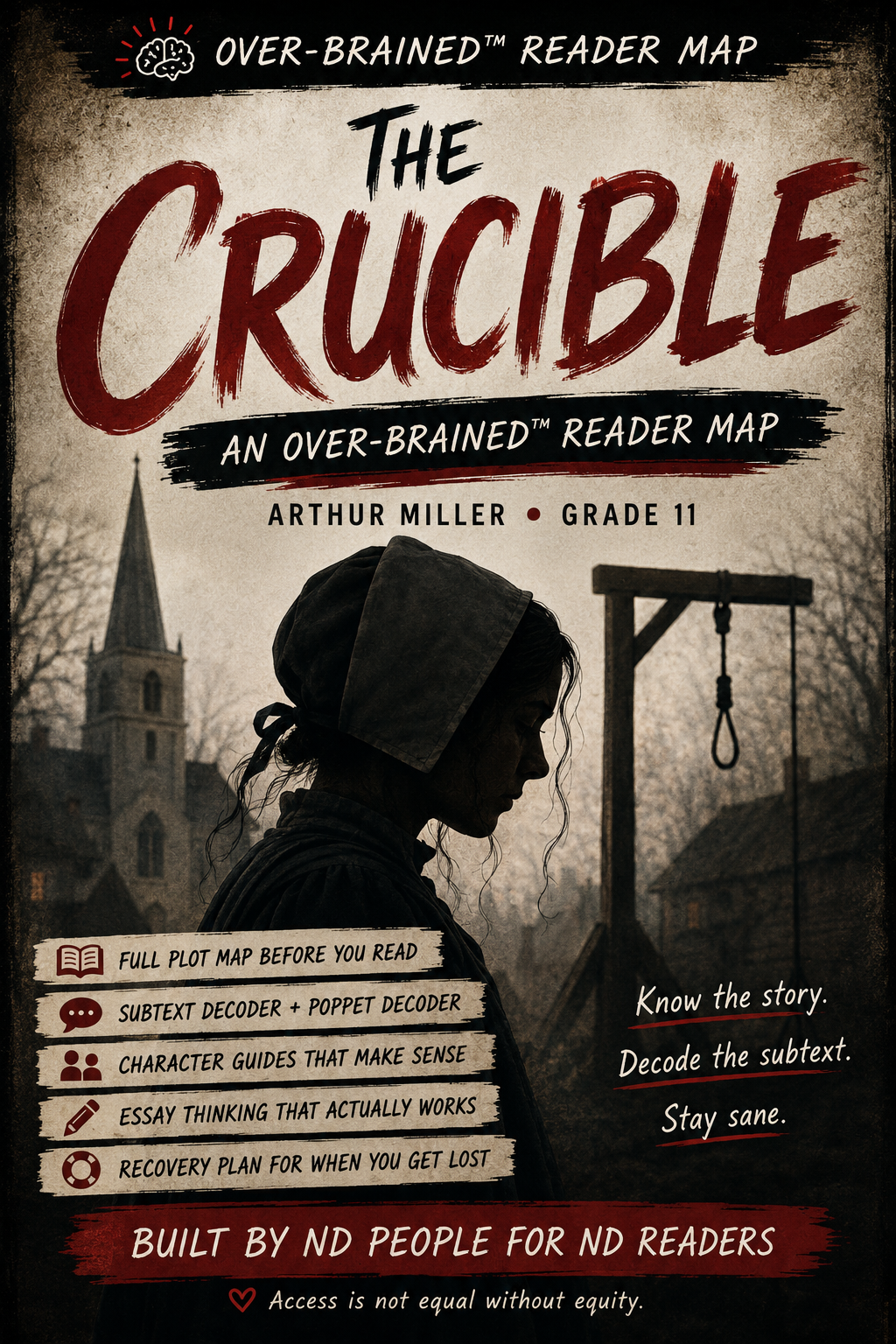
Inside, students get a story-first orientation before they begin, an Austen-specific Social Language & Irony Decoder, a whole-book Reading the Room map, chapter-by-chapter plot guidance, relationship and character decoders, money-and-class context, theme and symbol support, essay angles with thesis starters, annotation guidance, an executive-function reading plan, and an I’m Lost recovery route for when the book stops making sense halfway through a chapter.
The guide does not replace the novel or lower the level of thinking. It removes the unnecessary barriers around the thinking.
Students still analyze irony, character, class, marriage, narrative perspective, and Austen’s argument about judgment. They just do not have to figure out what the assignment secretly expects while also trying to remember which wealthy man owns which estate.
Best for: Grades 11–12, independent readers, homeschool students, classroom support, literature units, and students using accommodations or alternative reading supports.
Built for the questions that derail readers first:
What is actually happening here?
What does this person really mean?
Why does money matter so much?
Who is judging whom?
Is the narrator serious right now?
What am I supposed to notice for class?
Where do I pick back up after I got lost?
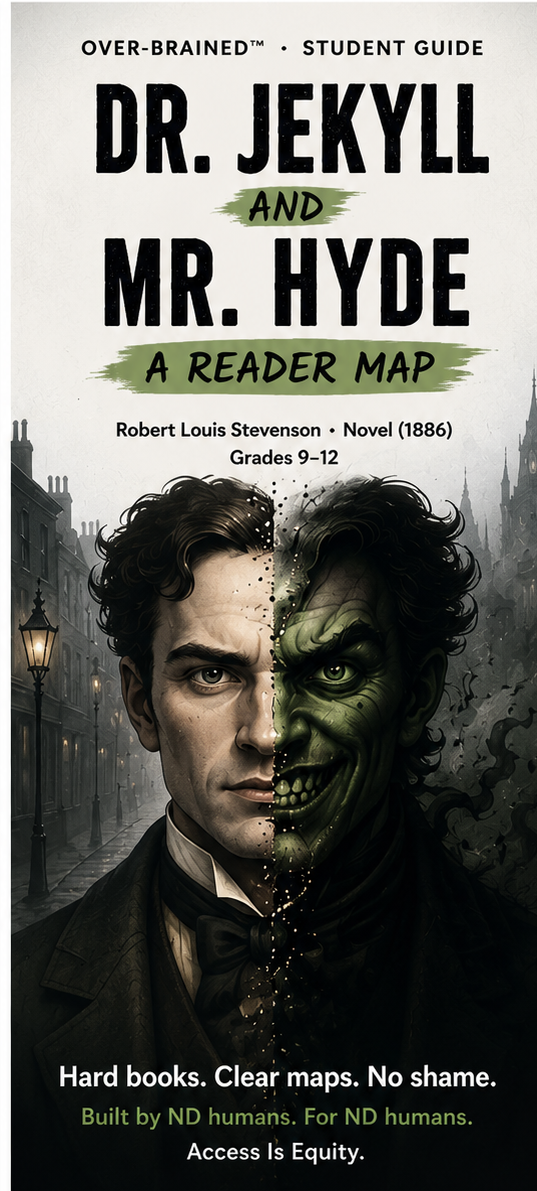
Hard books. Clear maps. No shame.
Classic literature, mapped by neurodivergent humans for neurodivergent readers.
Jane Austen is not difficult because nothing happens.
She is difficult because everything happens underneath what people say.
A compliment may be an insult. A polite visit may be a power move. Money determines who can marry whom, but almost nobody talks about money directly. Characters make judgments based on scraps of information, and the narrator is quietly laughing at half of them.
For neurodivergent readers, that can mean trying to decode the plot, the social rules, the irony, the historical context, and the teacher’s expectations all at once.
This guide gives you the map first.
The Over-Brained™ Pride and Prejudice Student Reader is built for students with ADHD, autism, dyslexia, executive-function challenges, 2e profiles, or any brain that does better when the hidden structure is made visible.
Inside, students get a story-first orientation before they begin, an Austen-specific Social Language & Irony Decoder, a whole-book Reading the Room map, chapter-by-chapter plot guidance, relationship and character decoders, money-and-class context, theme and symbol support, essay angles with thesis starters, annotation guidance, an executive-function reading plan, and an I’m Lost recovery route for when the book stops making sense halfway through a chapter.
The guide does not replace the novel or lower the level of thinking. It removes the unnecessary barriers around the thinking.
Students still analyze irony, character, class, marriage, narrative perspective, and Austen’s argument about judgment. They just do not have to figure out what the assignment secretly expects while also trying to remember which wealthy man owns which estate.
Best for: Grades 11–12, independent readers, homeschool students, classroom support, literature units, and students using accommodations or alternative reading supports.
Built for the questions that derail readers first:
What is actually happening here?
What does this person really mean?
Why does money matter so much?
Who is judging whom?
Is the narrator serious right now?
What am I supposed to notice for class?
Where do I pick back up after I got lost?
Hard books. Clear maps. No shame.
Classic literature, mapped by neurodivergent humans for neurodivergent readers.