 Image 1 of 1
You also do not need to relearn the Russian Revolution, explain political allegory over dinner, or stand over your teenager asking why Chapter Five is somehow still not finished.
Your job is different.
You are the co-pilot.
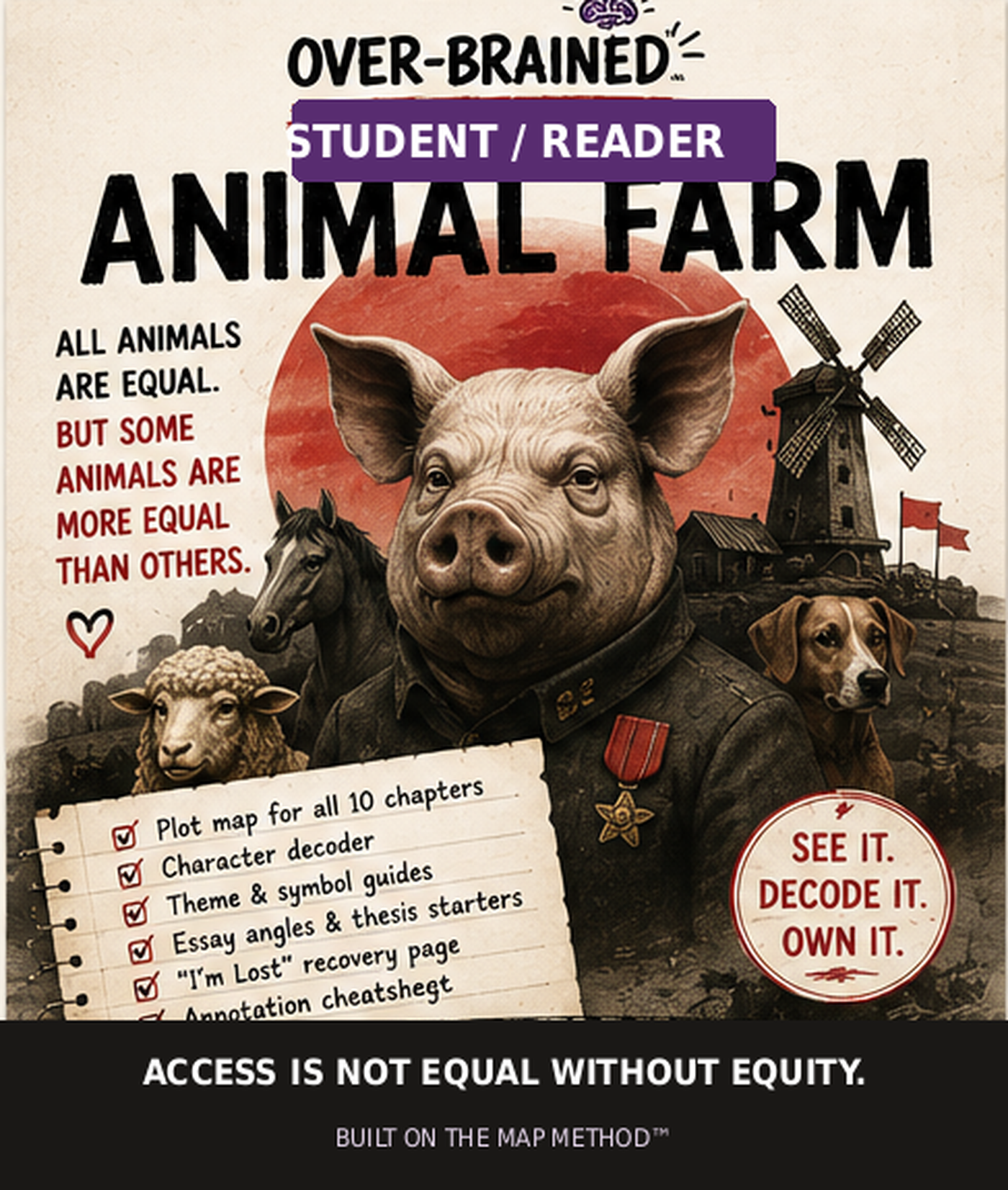
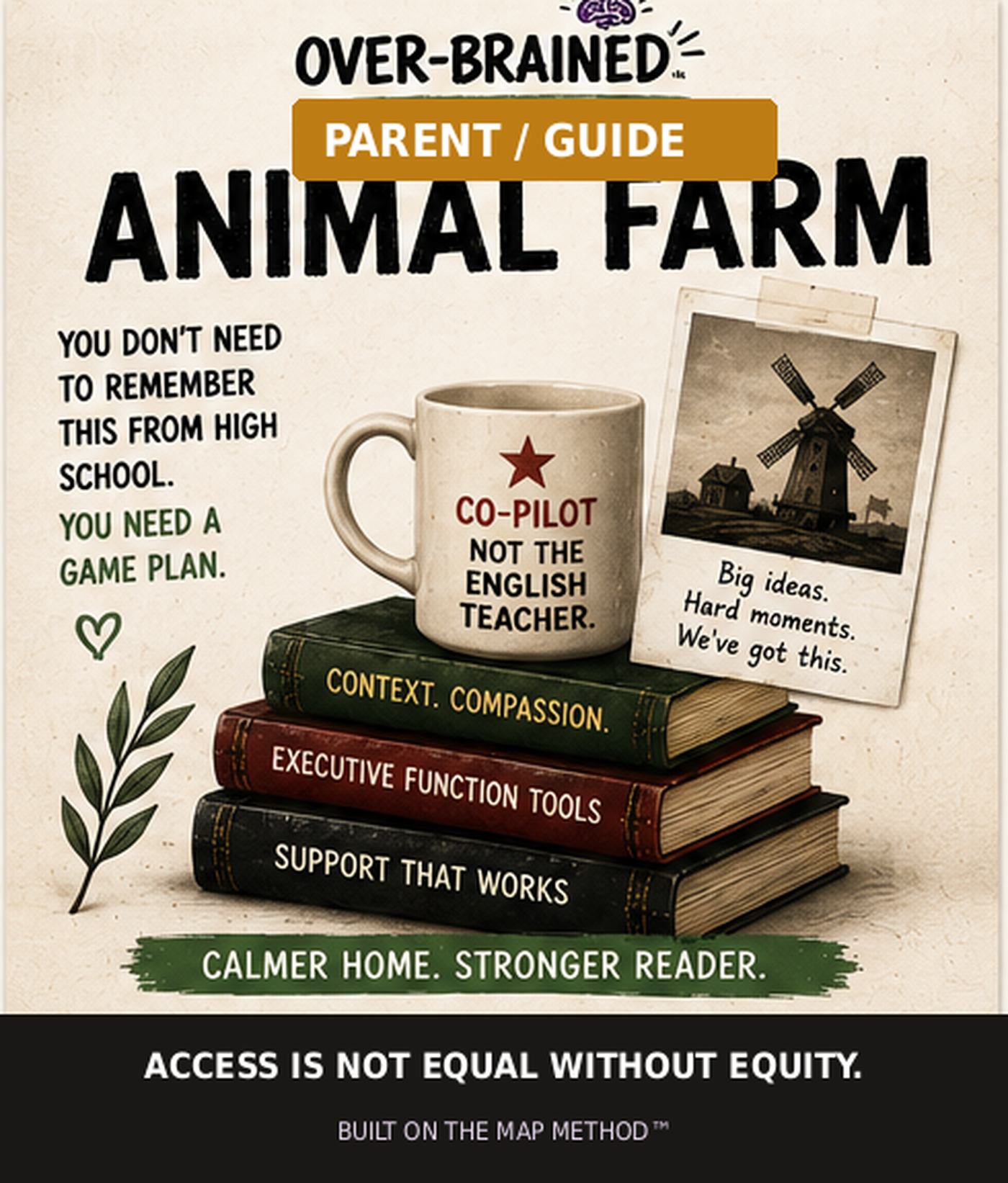
The free Over-Brained™ Animal Farm Parent / Guide is a 15-page companion for parents of neurodivergent readers. It gives you enough information to understand the assignment, recognize where your student is getting stuck, and help them move forward without taking over the work.
The guide starts with Animal Farm in plain English and explains the one thing parents really need to know: the book is not actually about farm animals. It is a coded political story, and a student can understand every sentence while still missing that hidden layer.
From there, the Parent / Guide focuses on the part that happens at home.
Animal Farm explained in plain English
The historical/allegory context you actually need
A content heads-up before your student begins
Guidance around the executions and Boxer’s betrayal
Why “I can’t start” can be executive dysfunction rather than defiance
Why “I don’t get it” can mean the student is missing the map, not the intelligence
How to scaffold without rescuing
Body-doubling strategies
How to shrink an overwhelming reading assignment
Tiny-timer and start-together strategies
Help with sustaining attention and choosing useful stop points
How to let a student talk an idea out before writing
Scripts for:
“I don’t get it.”
“This is stupid.”
shutdown
avoidance
being behind and panicking
A quick triage section for when homework is going sideways
Guidance for communicating with the school
A simple routine for using the Student / Reader together
The guide also prepares parents for some of the places Animal Farm may resonate differently for ND students.
The rules on the wall keep changing while everyone insists they did not.
Boxer’s sincerity and relentless effort are exploited.
Benjamin sees the pattern and feels powerless to change it.
And the reader who notices every tiny contradiction discovers that careful, literal attention is exactly what Orwell rewards.
That means a student may react to this book as more than a school assignment.
You do not have to turn that reaction into a literary-analysis lesson.
Sometimes the useful response is simply:
“That one got to you, huh?”
The English teacher handles the English.
You help make the work possible.
And the relationship outlasts every assignment.
Access is not equal without equity.
Built on The MAP Method™.
You also do not need to relearn the Russian Revolution, explain political allegory over dinner, or stand over your teenager asking why Chapter Five is somehow still not finished.
Your job is different.
You are the co-pilot.
The free Over-Brained™ Animal Farm Parent / Guide is a 15-page companion for parents of neurodivergent readers. It gives you enough information to understand the assignment, recognize where your student is getting stuck, and help them move forward without taking over the work.
The guide starts with Animal Farm in plain English and explains the one thing parents really need to know: the book is not actually about farm animals. It is a coded political story, and a student can understand every sentence while still missing that hidden layer.
From there, the Parent / Guide focuses on the part that happens at home.
Animal Farm explained in plain English
The historical/allegory context you actually need
A content heads-up before your student begins
Guidance around the executions and Boxer’s betrayal
Why “I can’t start” can be executive dysfunction rather than defiance
Why “I don’t get it” can mean the student is missing the map, not the intelligence
How to scaffold without rescuing
Body-doubling strategies
How to shrink an overwhelming reading assignment
Tiny-timer and start-together strategies
Help with sustaining attention and choosing useful stop points
How to let a student talk an idea out before writing
Scripts for:
“I don’t get it.”
“This is stupid.”
shutdown
avoidance
being behind and panicking
A quick triage section for when homework is going sideways
Guidance for communicating with the school
A simple routine for using the Student / Reader together
The guide also prepares parents for some of the places Animal Farm may resonate differently for ND students.
The rules on the wall keep changing while everyone insists they did not.
Boxer’s sincerity and relentless effort are exploited.
Benjamin sees the pattern and feels powerless to change it.
And the reader who notices every tiny contradiction discovers that careful, literal attention is exactly what Orwell rewards.
That means a student may react to this book as more than a school assignment.
You do not have to turn that reaction into a literary-analysis lesson.
Sometimes the useful response is simply:
“That one got to you, huh?”
The English teacher handles the English.
You help make the work possible.
And the relationship outlasts every assignment.
Access is not equal without equity.
Built on The MAP Method™.