 Image 1 of 1
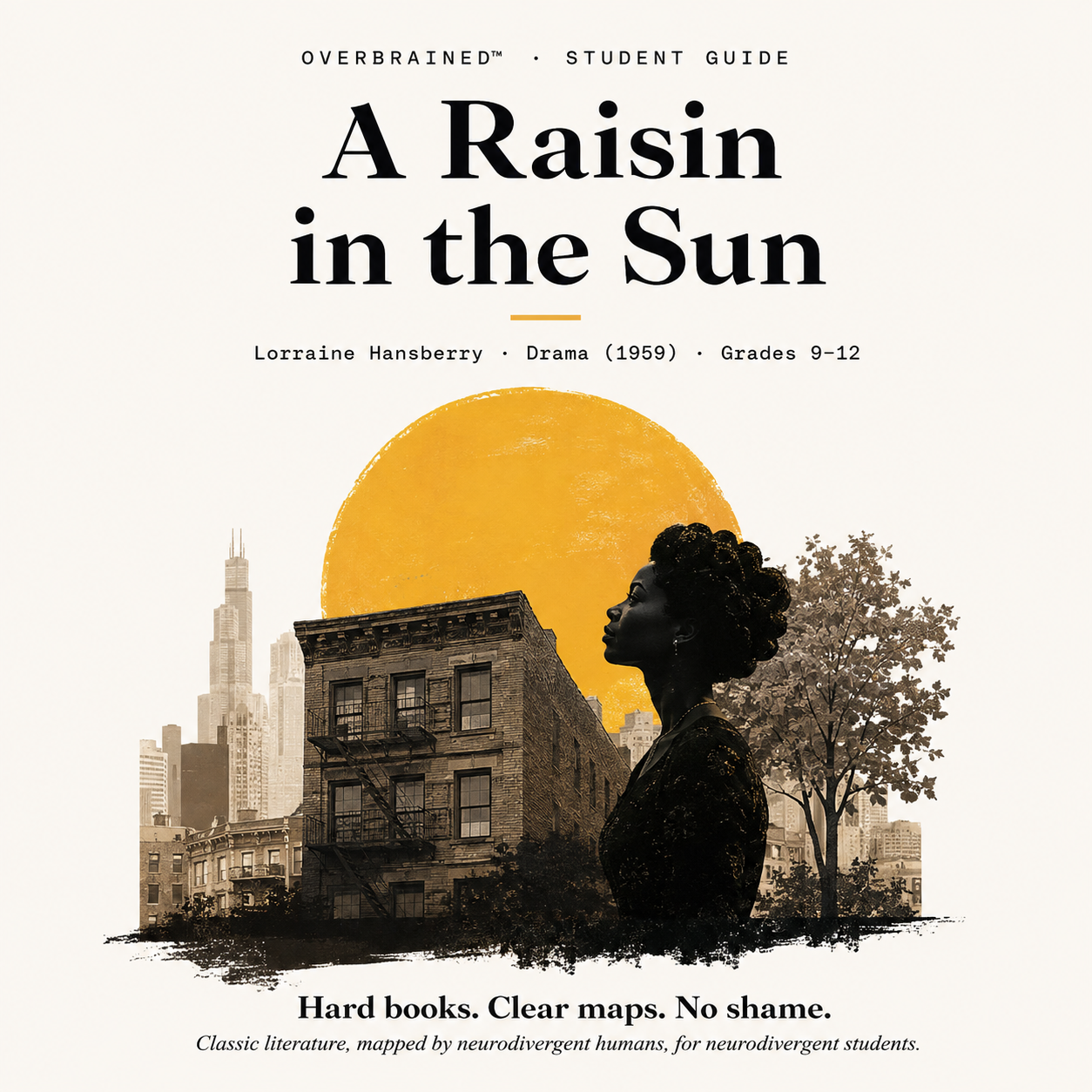
Welcome to A Raisin in the Sun.
This play is not difficult because Lorraine Hansberry uses impossible language.
She does not.
It is difficult because people rarely say the thing they actually mean.
Walter talks about money when he means dignity.
Ruth talks about practical things while carrying exhaustion, fear, and an entire household.
Beneatha argues about hair, dating, and Africa while trying to figure out who she gets to become.
And Lindner manages to represent racial exclusion while barely raising his voice.
If you read only the surface conversation, you can follow the entire play and still miss the play.
That is what this guide is built to fix.
This is not a replacement for A Raisin in the Sun.
It is the map you keep open beside it.
Inside, you’ll get:
A Raisin in the Sun in Six Beats so you know the shape of the story before you start
The 60-Second Setup with the context everyone assumes you already know
A complete No-BS Scene Map
Subtext Decoders showing what people say versus what is really happening
Character Decoder for motives, relationships, and competing dreams
Theme Decoder
Symbol Decoder for the plant, apartment, hair, and other recurring meaning
What Your Teacher Probably Wants
Essay Angles That Don’t Suck
Thesis starters that give you somewhere to begin
An Annotation Cheatsheet
A reading and watching plan
ADHD, Autistic, and ND Reader Notes
Executive-function check-ins
The “I’m Lost” Recovery Page
Final exam and essay preparation
You’ll find support for:
ADHD brains that lose the thread when too many things are happening at once.
Autistic readers who may understand the literal dialogue perfectly and still be expected to magically infer the conversation underneath it.
Dyslexic and overloaded readers who benefit from knowing the story before spending cognitive energy on the original text.
And students who are simply tired, behind, overwhelmed, or wondering why everyone else seems to know what they are supposed to notice.
You do not have to earn access by struggling first.
#This guide contains original analysis and support material and is designed to be used alongside Lorraine Hansberry’s A Raisin in the Sun. The play itself is not included.
Welcome to A Raisin in the Sun.
This play is not difficult because Lorraine Hansberry uses impossible language.
She does not.
It is difficult because people rarely say the thing they actually mean.
Walter talks about money when he means dignity.
Ruth talks about practical things while carrying exhaustion, fear, and an entire household.
Beneatha argues about hair, dating, and Africa while trying to figure out who she gets to become.
And Lindner manages to represent racial exclusion while barely raising his voice.
If you read only the surface conversation, you can follow the entire play and still miss the play.
That is what this guide is built to fix.
This is not a replacement for A Raisin in the Sun.
It is the map you keep open beside it.
Inside, you’ll get:
A Raisin in the Sun in Six Beats so you know the shape of the story before you start
The 60-Second Setup with the context everyone assumes you already know
A complete No-BS Scene Map
Subtext Decoders showing what people say versus what is really happening
Character Decoder for motives, relationships, and competing dreams
Theme Decoder
Symbol Decoder for the plant, apartment, hair, and other recurring meaning
What Your Teacher Probably Wants
Essay Angles That Don’t Suck
Thesis starters that give you somewhere to begin
An Annotation Cheatsheet
A reading and watching plan
ADHD, Autistic, and ND Reader Notes
Executive-function check-ins
The “I’m Lost” Recovery Page
Final exam and essay preparation
You’ll find support for:
ADHD brains that lose the thread when too many things are happening at once.
Autistic readers who may understand the literal dialogue perfectly and still be expected to magically infer the conversation underneath it.
Dyslexic and overloaded readers who benefit from knowing the story before spending cognitive energy on the original text.
And students who are simply tired, behind, overwhelmed, or wondering why everyone else seems to know what they are supposed to notice.
You do not have to earn access by struggling first.
#This guide contains original analysis and support material and is designed to be used alongside Lorraine Hansberry’s A Raisin in the Sun. The play itself is not included.